How to Choose the Right Sofa for Your Home
Learning how to choose the right sofa matters: a sofa is usually the biggest piece of furniture in a living room — and often the most used. It is where you read, watch films, host guests, and sometimes even nap. Because a good sofa is also a real investment, choosing the wrong one is a mistake you will notice every single day.
The good news is that picking the right sofa is not guesswork. Measure your space, learn the basic sizes and types, and know what to look for in a frame and fabric — this guide walks you through each step.
How to Choose the Right Sofa for Your Space
Before you look at a single sofa, grab a tape measure. This is the step most people skip — and the one that causes the most returns.
Measure the room. Note the length and width of the wall where the sofa will go, and leave at least 45–60 cm of walking space in front of it. A sofa should never block a doorway or force you to squeeze past it.
Measure the doorways and hallways too — a sofa has to get into your home first. Compare every door, hallway, and stair turn with the sofa’s height and depth.
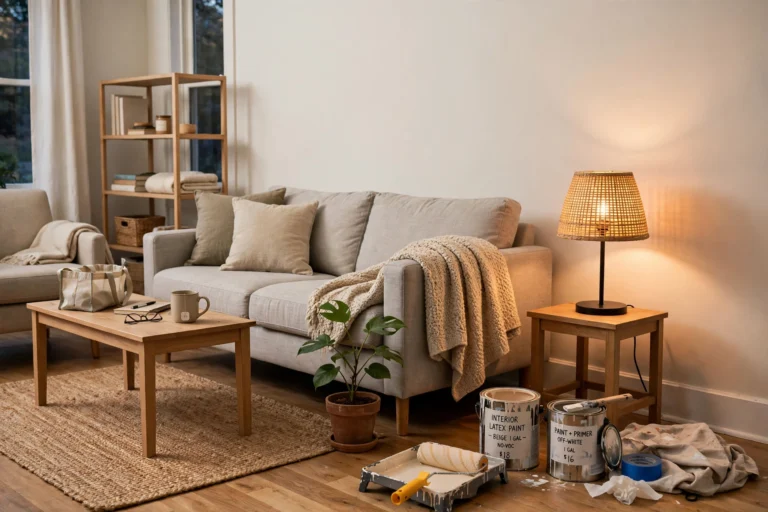
Mark it out. Use painter’s tape on the floor to outline the sofa’s footprint and live with it for a day or two. Does it leave enough room for a coffee table? Can you open nearby doors and drawers? This simple trick prevents most sizing mistakes.
Think about scale. A sofa should take up about two-thirds of the wall it sits against — a very large sofa can overwhelm a small room, while a small sofa can look lost in a large one.
Sofa Sizes and Types
Sofas come in a few standard sizes and shapes. Knowing the difference makes the choice much easier.
Two-seater sofas are usually 120–160 cm wide and seat two people. They work well in small living rooms, bedrooms, or as a second sofa paired with a larger one.
Three-seater sofas are usually 180–220 cm wide and seat three people. This is the most common choice for a family living room — a good balance of seating and size.
L-shaped and corner sofas use two sections joined at a right angle. They seat four or more people and make excellent use of a corner, but they are hard to move and can dominate a small space, so measure carefully.
Sleeper sofas (sofa beds) fold out into a bed. They are practical if you often host overnight guests, but the mattress is rarely as comfortable as a real bed, and the mechanism adds weight. Try the fold-out action in the shop before you buy.
Chaise sofas have an extended seat on one side for stretching your legs. They are comfortable for reading and relaxing, but they take up extra floor space and only work on one side of the room.
When you are deciding, count how many people need to sit at the same time on a normal evening — not just at parties. Buy for your everyday life.
Frame and Cushion Quality
What is inside a sofa matters far more than how it looks in a photograph. A well-built frame can last 10–15 years; a poor one may sag within two.
The frame. The best frames are made from kiln-dried hardwood, which resists warping. Avoid frames made only from particleboard or soft plastic. In the shop, lift one corner: a good frame feels solid and does not twist or creak.
The springs. Sinuous springs (S-shaped wires) are common and fine for most sofas. Eight-way hand-tied springs are the premium option and feel more even, but they add to the price. Sit down and bounce slightly — you should feel even support, not a hard spot or a dip.
The cushions. Foam cushions hold their shape and are easy to look after. Feather or down-wrapped cushions feel softer and more luxurious, but they need regular plumping. A foam core wrapped in fibre is a good middle ground. Ask whether the cushion covers are removable and washable — that matters a lot in a busy household.
The legs and joints. Check that the legs are firmly bolted on and the joints are screwed and glued, not just stapled.
Fabric Choices: Kids, Pets, or a Formal Living Room
Fabric is where your lifestyle should decide, not just your taste.
Homes with kids or pets. Choose something hard-wearing and easy to clean: tightly woven fabrics, microfibre, and performance fabrics resist stains and claws. Leather wipes clean but can scratch. Avoid light colours, silk, and delicate linen, and look for removable, washable covers.
A formal living room. If the sofa will be used mainly for guests and quiet evenings, you can choose softer, more delicate fabrics such as velvet or linen. These look beautiful, but they show marks more easily and need gentler care.
Everyday family use. A mid-tone fabric in a durable weave is the safest all-round choice. It hides everyday marks, works with most colour schemes, and does not show wear quickly. Always ask for a fabric swatch and look at it in your own room’s light before deciding — colours change a lot between a bright shop and a home.
A quick test. Rub the swatch firmly with your hand. If it pills or pulls straight away, it will not survive daily use.
Colour and Style Matching
A sofa is the anchor of the room, so its colour sets the tone for everything else.
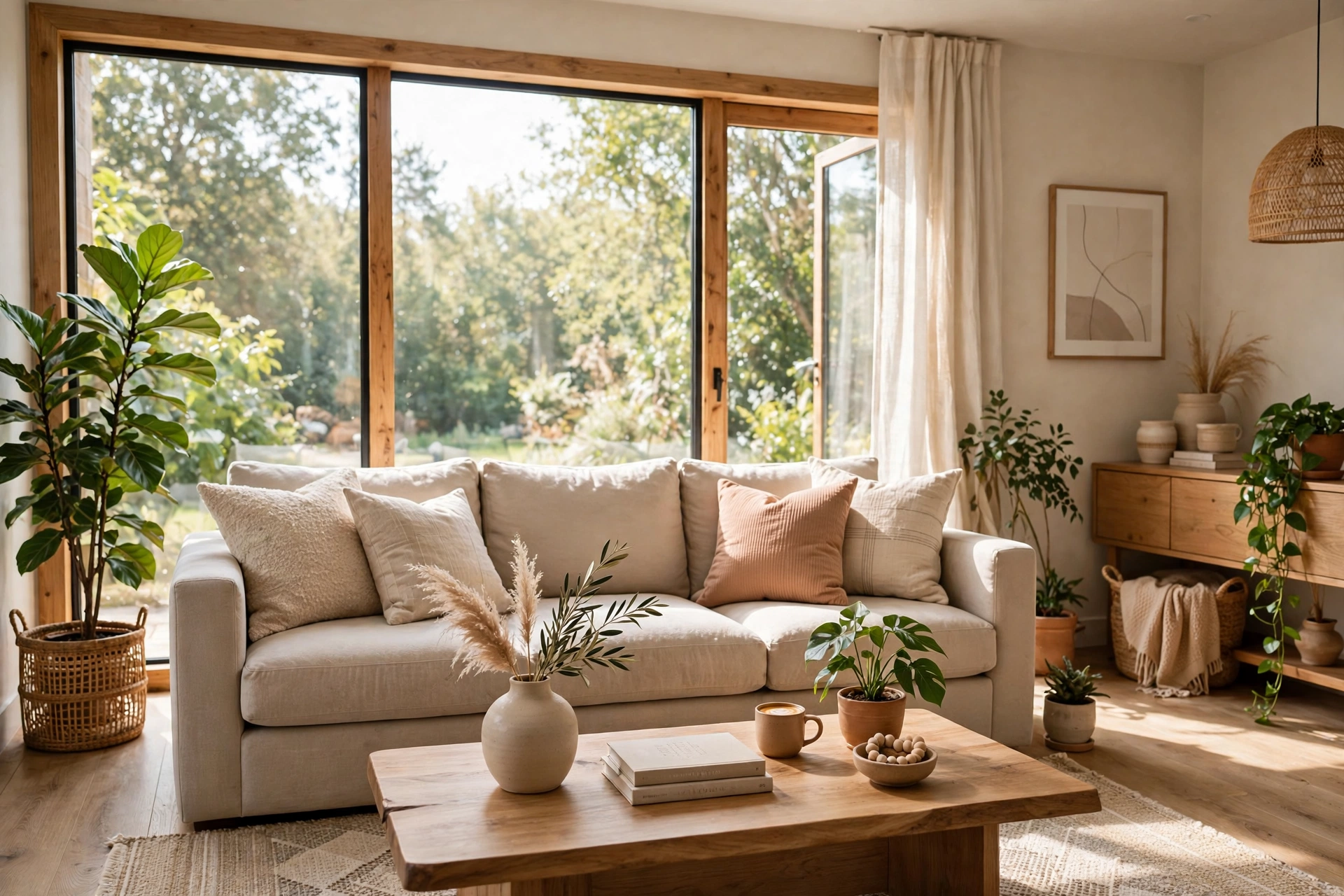
If you want a calm, flexible room, choose a neutral colour — grey, beige, cream, or soft blue. Neutrals are easy to live with and easy to update later with new cushions, throws, and rugs.
If you want the sofa to be the star, a deep green, navy, or warm rust can look wonderful — but only if the rest of the room stays quiet. One bold piece per room is enough.
Match the style to your home. A clean, low-profile sofa suits a modern room; rolled arms and wooden legs suit a traditional room. Look at the other furniture in the room — the sofa should sit comfortably alongside it, not fight it.
Order swatches. Never choose a sofa colour from a screen alone. Fabric looks different under your own lighting, next to your walls and floor.
Budget Tips
A good sofa is worth spending on, but a few habits can keep the cost under control — see our budget-friendly renovation tips for more ways to save.
Set a range, not a fixed number. Decide the most you will spend before you start looking, then aim slightly below it to leave room for delivery and cushions.
Spend on the frame, save on the fabric. A strong frame with a simple fabric outlasts a weak frame in a luxury fabric, and covers can be changed later.
Check the extras. Delivery, stain protection, and warranties can add a lot — ask what is included before you pay.
Buy at the right time. Many shops run sales around holidays and at the end of a season. If you are not in a rush, waiting a few weeks can save a real amount.
Consider a floor model. A display sofa in good condition can cost much less than a new one, and you can see exactly how it has worn.
Frequently Asked Questions
What size sofa should I buy for a small living room?
Choose a sofa that covers about two-thirds of the wall — in most small rooms, a two-seater or a compact three-seater (under 200 cm) works best. Leave at least 45 cm of walking space in front of it.
How long should a good sofa last?
A well-built sofa with a hardwood frame should last 10–15 years with normal use. A cheaper sofa with a softwood or particleboard frame may last 3–5 years before it starts to sag. The frame matters more than the fabric — fabric can be cleaned or recovered, but a broken frame cannot be fixed easily.
Which sofa fabric is best for homes with kids or pets?
Tightly woven fabrics, microfibre, and performance fabrics are the most practical choices. They resist stains, are easy to wipe clean, and do not snag easily. Removable, washable covers are a big help. Avoid silk, light-coloured linen, and loose weaves in a busy family room.
Should I choose a light or dark coloured sofa?
Light colours make a room feel larger and brighter, but they show marks more easily. Dark colours hide marks and feel cosy, but they can make a small room feel smaller. For most homes, a mid-tone neutral is the easiest choice — it hides everyday wear and works with almost any decor.
Is it worth spending more on a sofa frame?
Yes, if you plan to keep the sofa for years. The frame is the part you cannot see and cannot easily replace. A solid hardwood frame with good springs will keep its shape and comfort long after a cheaper frame has sagged. Spend on the frame, and save on fabric and extras if you need to.