
How to Be Better at Interior Design Mintpaldecor: A Simple Step-by-Step Guide
Quick answer: To get better at interior design, learn a few simple rules (like the 3-5-7 rule and the 70/30 rule), practice on one small room at a time, study good examples every day, and trust your eyes. This guide on how to be better at interior design mintpaldecor style walks you through each step in plain words.
Why “How to Be Better at Interior Design Mintpaldecor” Is a Smart Place to Start
Let me begin with a short story. A reader once told us about her first apartment. She bought a big grey sofa, a bright red rug, three different lamps, and a bunch of random wall art. Every item was nice on its own. Together, the room felt messy and tired.
She was not “bad at design.” She just had no system. Once she learned a few basic rules, she fixed the room in one weekend without buying much new.
That is the main idea behind how to be better at interior design mintpaldecor. Good interior design is not magic or a gift you are born with. It is a skill, and like cooking or driving, you can learn it step by step. In the same way, the mintpaldecor approach focuses on warm, simple, lived-in rooms that feel good to be in. You can read more home guides on RenovateNest as you go.
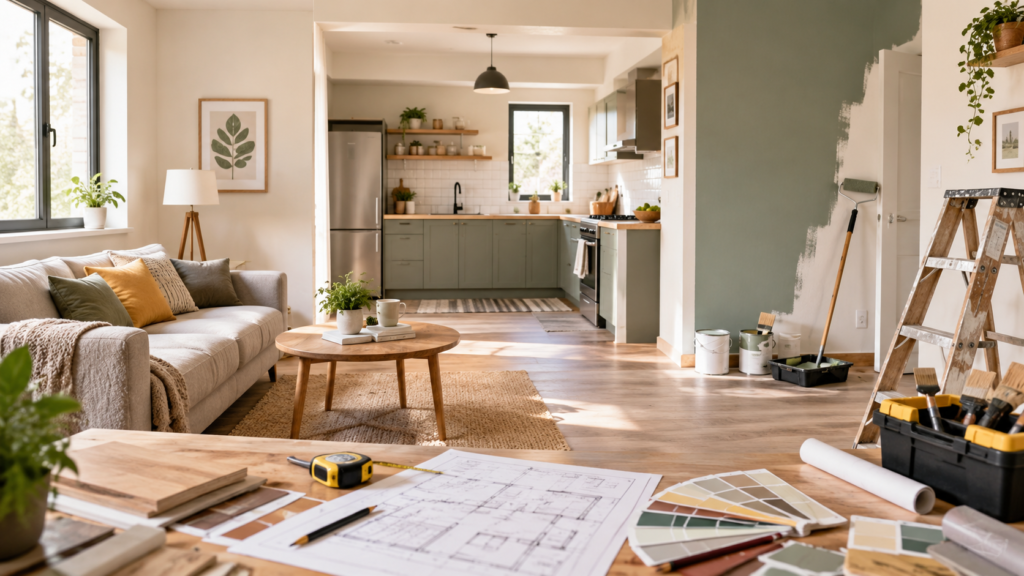
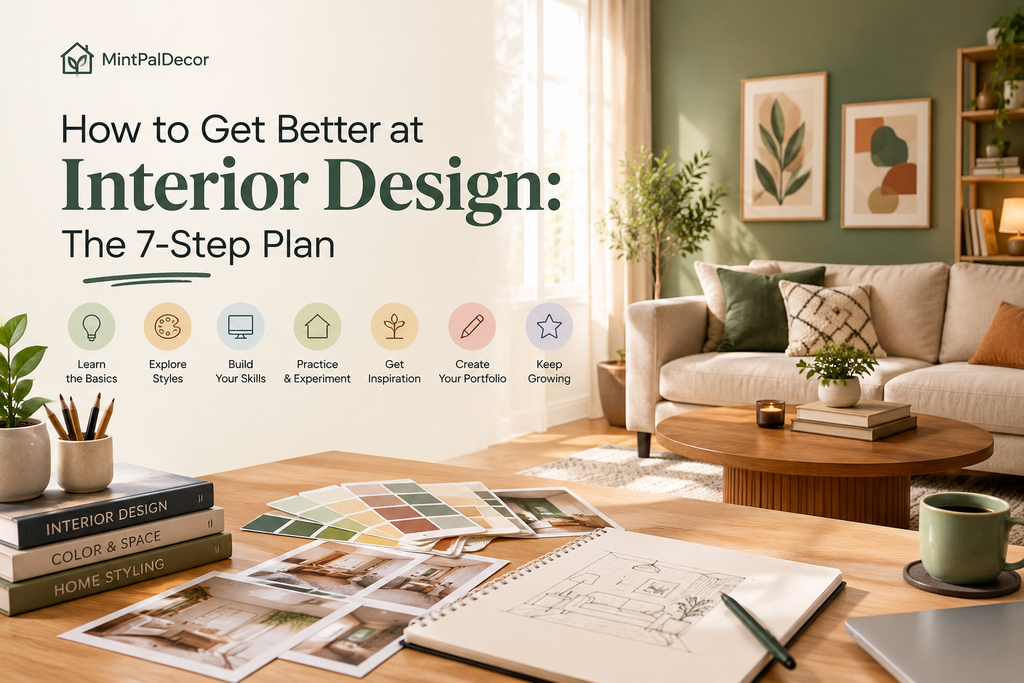
First, here is the short plan. Next, we will go through each step in detail.
- Study rooms you love.
- Learn the basic design rules.
- Pick a color plan.
- Fix your lighting.
- Mix textures and layers.
- Edit, edit, edit.
- Practice on small projects.
Step 1: Study Rooms You Love
Start by collecting pictures. Save photos from Pinterest, Houzz, or Architectural Digest. After saving 20 to 30 images, look for patterns. Do you keep picking light wood? Soft white walls? Plants?
This simple habit builds your personal taste, which is the base of all good design. You can also build a mood board to keep your ideas in one place.
Step 2: Learn the Basic Design Rules
Rules are not there to trap you. Instead, they give you a safe starting point. We cover the most useful ones in the next sections.
Step 3: Pick a Color Plan
Color can make or break a room. Therefore, learn how the color wheel works and read a short intro to color theory. Then pick a simple color scheme with two or three main colors.
Step 4: Fix Your Lighting
Many people forget this step. However, lighting changes how every color and object looks. Use three layers: overhead light, task light (like a reading lamp), and soft accent light. Warm bulbs usually make a home feel cozy.
Step 5: Mix Textures and Layers
A room with only smooth, flat surfaces feels cold. So add a chunky blanket, a woven basket, a wood table, or linen curtains. Texture gives a room depth without adding more color.
Step 6: Edit, Edit, Edit
Here is a trick many pros use: take one thing out before you finish. If a corner feels crowded, remove one item. Often the room looks better right away.
Step 7: Practice on Small Projects
Do not start with your whole house. Instead, redo a shelf, a coffee table, or one corner. Small wins build confidence fast.
What Is the 3-5-7 Rule in Decorating?
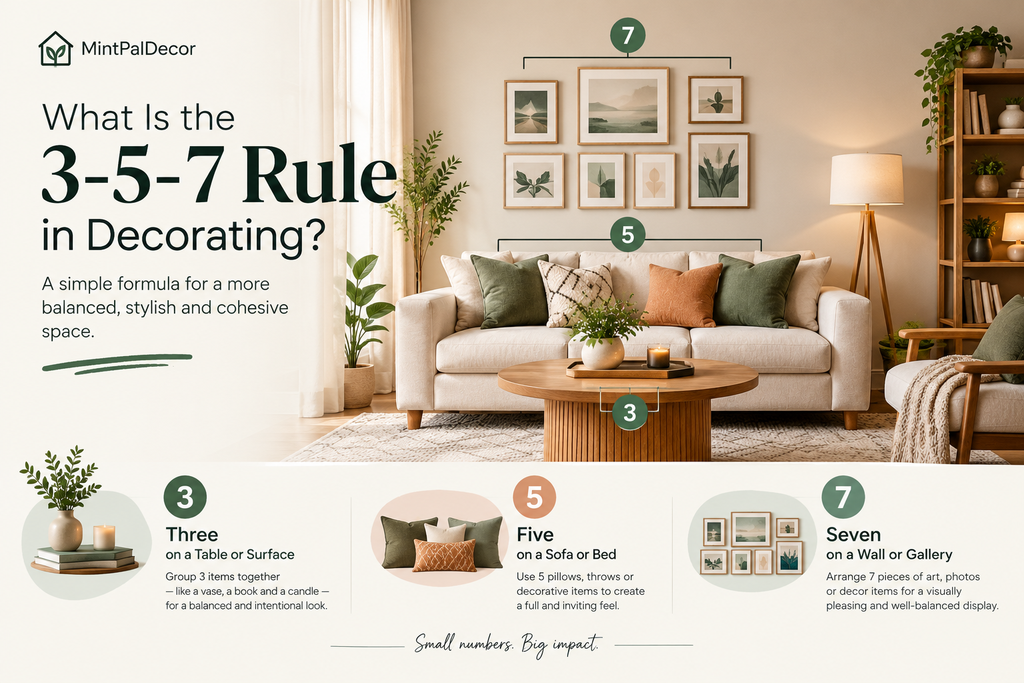
The 3-5-7 rule in decorating is one of the easiest tricks you can learn. It says that groups of items look best in odd numbers: three, five, or seven. Odd groups feel natural and relaxed, while even groups can look stiff.
Here is how to use it, step by step:
- Pick a surface, like a shelf or console table.
- Choose three items to start (for example, a vase, a small plant, and a stack of books).
- Vary the height: one tall, one medium, one short.
- Add two more items if the surface is large, which makes five.
- Step back and look. If it feels crowded, remove one.
Anecdote: A friend of ours used to line up four identical candles on her mantel. It looked like a store display. After switching to three candles of different heights and adding a small framed photo, the same mantel suddenly looked styled and warm. She spent nothing extra.
The 3-5-7 rule connects closely to ideas like visual balance and proportion, which help your eye feel at ease.
How Do I Improve My Interior Design Skills? Daily Habits That Work
This is the question we hear most. The honest answer is: small habits, repeated often. Here are five that really help.
- Look closely every day. When you visit a cafe, hotel, or friend’s home, notice why it feels good. Is it the lighting? The color? The empty space?
- Take before-and-after photos. Photos show you what your eye misses in real life.
- Visit stores and showrooms. Touch fabrics and test furniture so you learn about quality and size.
- Follow trusted sources. Professional groups like ASID share ideas and standards, and the NKBA is great for kitchen and bath planning.
- Keep a design notebook. Write down what worked and what did not.
Moreover, do not be afraid of mistakes. One of the best lessons for a new decorator is painting a wall the wrong shade. You learn fast, and next time you test a sample first.
If you want more room-by-room ideas, check out the other tips on RenovateNest.
What Is the 70/30 Rule in Design?
The 70/30 rule in design is a simple way to balance color and style. In short, about 70% of the room uses your main, calm look (like soft neutrals and basic furniture). The other 30% is for bold accents, patterns, or special pieces.
Think of it like a good outfit. Most of it is simple, and then one bright scarf makes it stand out.
How to use the 70/30 rule:
- Choose a calm base color for walls, large furniture, and floors.
- Add your accent color in pillows, art, or a rug.
- Keep the accent to around 30% so the room does not feel busy.
- Repeat the accent color in two or three places to tie everything together.
You may also hear about the 60-30-10 rule, which splits the room into dominant, secondary, and accent colors. Both rules aim for the same goal: a room with order and personality.
Anecdote: One reader had a bright yellow room that gave her headaches. She kept the yellow only on a chair and two pillows, painted the walls warm white, and finally loved being in the room.
What Is the 15% Rule in Interior Design?
The 15% rule in interior design is explained in a few different ways online, so it helps to know the most common version. In most guides, it means leaving roughly 15% of your room open, empty, or “breathing space.” That is, do not fill every wall, shelf, and corner.
This idea matches the well-known concept of negative space, where empty areas help the important things stand out.
Please note: this is a handy guideline, not a law. Some designers use “15%” for other tips, such as the gap to leave between furniture and walkways. Treat it as a gentle reminder to edit and give your room room to breathe.
Easy ways to apply it:
- Leave some wall space blank around your art.
- Keep at least one shelf area half empty.
- Make sure you can walk easily through the room, which relates to good ergonomics.
- Do not push every sofa and chair against the wall.
How to Improve Interior Design with a Simple Room-Makeover Checklist
Now let us put all these rules together. Use this checklist when you redo any room.
| Step | What to do | Rule it uses |
|---|---|---|
| 1 | Measure the room and list what you must keep | Planning |
| 2 | Pick a color plan with a calm base | 70/30 rule |
| 3 | Group decor in odd numbers | 3-5-7 rule |
| 4 | Add three layers of light | Lighting |
| 5 | Add texture with fabric, wood, or plants | Layering |
| 6 | Remove extra items and leave open space | 15% rule |
| 7 | Take a photo and adjust | Review |
Follow this list, and you will see big changes even on a small budget.
Common Mistakes to Avoid
Meanwhile, here are the mistakes beginners make most often:
- Buying furniture before measuring. Always measure first.
- Choosing paint from a tiny sample under store lights. Test it at home.
- Matching everything. A perfectly matched room feels flat.
- Hanging art too high. The center should sit around eye level.
- Ignoring the people who live there. A room should fit real life, not just photos.
Final Thoughts: Your Next Step
To sum up, learning how to be better at interior design mintpaldecor style is not about spending a lot or owning fancy things. It is about learning simple rules, practicing often, and trusting your own taste. Start with one shelf this week. Use the 3-5-7 rule, keep to the 70/30 balance, and leave a little breathing space.
Over time, your eye gets sharper and your rooms get better. For more practical home ideas, visit RenovateNest and keep exploring.
Note: Rules like 3-5-7, 70/30, and 15% are popular design guidelines, not strict laws. Adjust them to fit your space and taste.
Frequently Asked Questions (FAQ)
How do I improve my interior design skills?
Study rooms you like, learn basic rules, practice on small spaces, and review your results with photos. Doing a little each week works better than a big push once a year.
What is the 3-5-7 rule in decorating?
It is a styling tip that says to group objects in odd numbers (three, five, or seven) and vary their heights so the display looks natural.
What is the 70/30 rule in design?
It means using about 70% of a calm base look and 30% for bold accents, patterns, or special pieces so the room feels balanced.
What is the 15% rule in interior design?
In the most common version, it means keeping about 15% of a room open or empty for breathing space. Some designers use the number in other ways, so treat it as a guideline.
How to get better at interior design if I have no training?
You do not need a degree to improve your own home. Use free tools like mood boards, visit showrooms, and follow trusted design sources.
Can I use mintpaldecor ideas on a small budget?
Yes. Rearranging furniture, changing lighting, adding texture, and editing clutter cost very little and make a big difference.
How long does it take to improve at interior design?
Most people notice progress within a few small projects. Confidence grows with each room you finish.