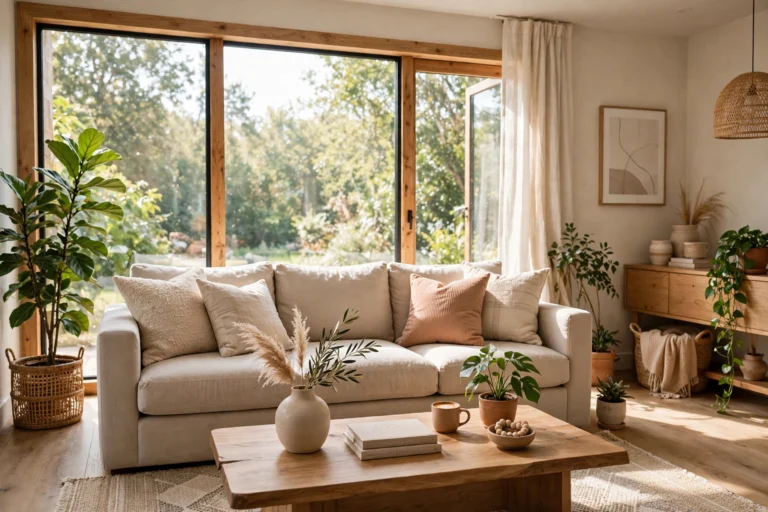
5 Budget-Friendly Renovation Tips
These budget friendly renovation tips prove renovating a home does not have to mean knocking down walls or spending a fortune. In fact, some of the most noticeable changes come from small, focused updates that cost very little. A fresh coat of paint, better lighting, or a single well-chosen piece can make a room feel completely new.
The trick is to spend where it shows. Instead of trying to change everything at once, pick the updates that give you the biggest visual change for the least money — and do them one at a time. These five tips are a good place to start.
Budget Friendly Renovation Tips: Paint, the Cheapest Transformation
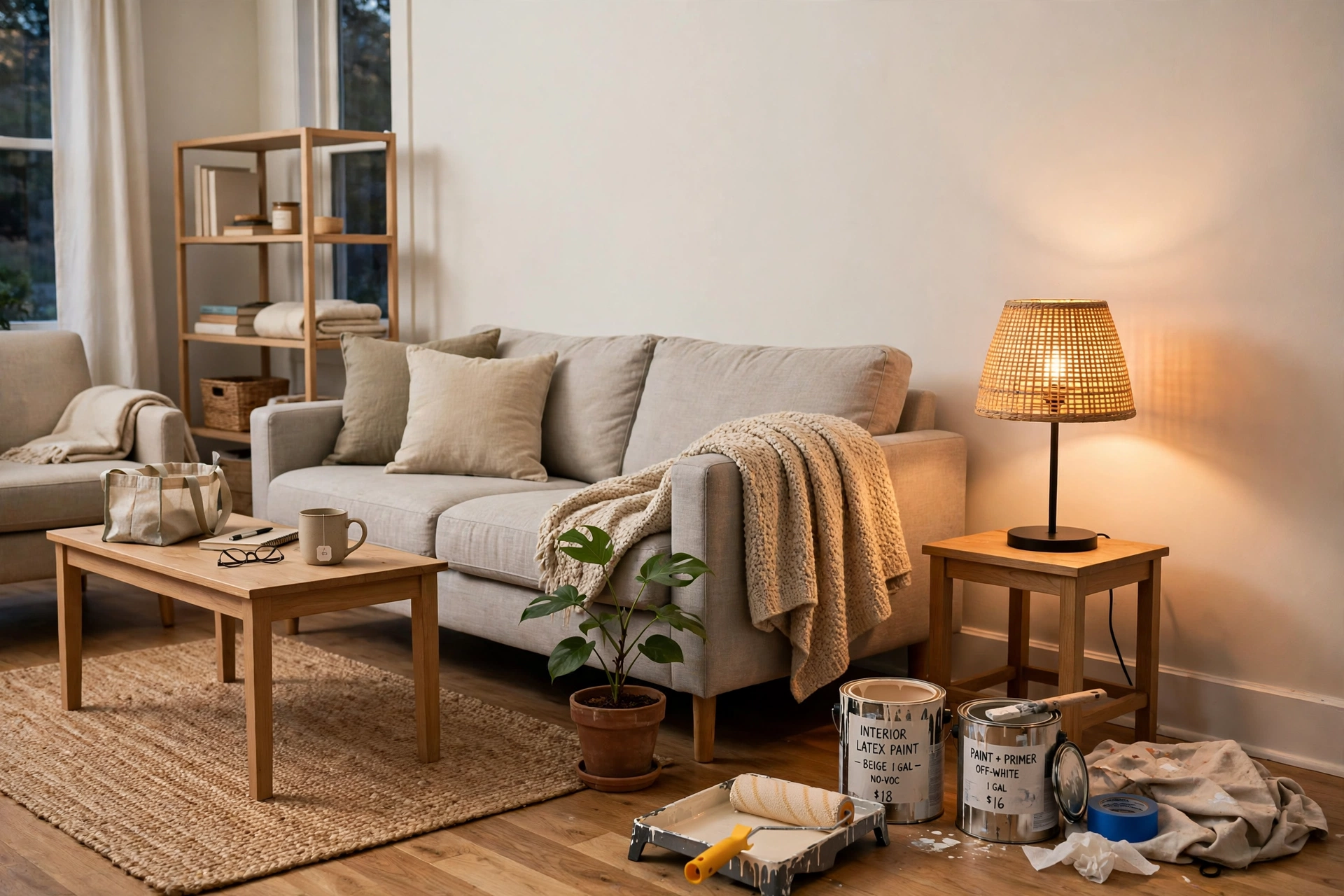
Paint is the single best-value change you can make to a room. For the cost of a few tins of paint and a weekend of work, you can make a tired room feel bright and new.
How to do it well:
- Choose one wall first. If the whole room feels like too much, start with a single feature wall in a colour you love. You can always paint the rest later.
- Test before you commit. Paint a small patch and look at it in morning and evening light. Colours change a lot between a shop and your home.
- Prep properly. Clean the walls, fill small holes, and use painter’s tape around edges. Good preparation is what makes a paint job look professional rather than rushed.
- Use the right finish. Matt paint hides wall marks and suits bedrooms and living rooms. A satin or eggshell finish is easier to wipe clean, so it works better in kitchens and hallways.
Cost guidance: Paint is a low-cost project — a room usually needs only a few tins of paint, brushes, and tape. Doing it yourself keeps the cost down; hiring a painter is the main extra expense, so get a quote first if you plan to hire help.
Upgrade Your Lighting
Lighting changes how a room feels more than almost anything else. A room with one harsh ceiling light will always feel flat, while the same room with layered, warm lighting feels inviting.
How to do it well:
- Add layers. Combine three types of light: general light from the ceiling, task light for reading or cooking, and accent light such as a lamp or wall light.
- Change the bulbs. Warm white bulbs (around 2700K) suit living rooms and bedrooms. Cool white suits kitchens and workspaces. Swapping bulbs costs very little and changes the mood instantly.
- Swap a light fitting. Replacing an old ceiling fitting with a simple modern one is usually a quick job and makes a big visual difference. Always switch the power off first, or hire an electrician if you are not confident.
- Use mirrors. A mirror opposite a window bounces natural light around the room and makes a small space feel larger.
Cost guidance: New bulbs and a simple lamp are low cost. A new ceiling fitting is a medium cost — far less than new furniture, and it changes the whole room.
Swap Hardware and Fixtures
Door handles, cabinet knobs, taps, and light switches are small details — but they are the things you touch and see every day. Replacing them is one of the quickest ways to make a kitchen or bathroom feel updated.
How to do it well:
- Start with the kitchen. New cabinet handles in a modern finish — matt black, brushed brass, or simple chrome — can make old cabinets look new.
- Match the finish. Keep all the hardware in one room the same finish so the result looks planned, not random.
- Measure before you buy. Check the distance between screw holes on your existing handles so the new ones fit without drilling new holes.
- Do the same in the bathroom. A new tap, towel rail, or mirror can refresh a bathroom for a fraction of the cost of retiling.
Cost guidance: This is a low-cost project. Handles and knobs are inexpensive, especially when bought in a set, and fitting them needs only a screwdriver and an afternoon.
Declutter and Rearrange
This tip costs nothing — and it can change a room more than anything you buy. Most rooms do not need more furniture; they need less of it, arranged better.
How to do it well:
- Take everything out. Remove the small items from shelves and surfaces first. If you have not used something in a year, put it in a box and store it out of sight for a month. If you do not miss it, let it go.
- Give every surface a job. A coffee table should hold a few things, not everything. Clear surfaces make a room feel calm and larger.
- Move the furniture. Try the sofa on a different wall, or angle a chair toward the window. Live with the new arrangement for a few days before deciding — the first arrangement is not always the best one.
- Use what you already own. A rug from another room, a lamp moved to a dark corner, or a picture hung at eye level can refresh a space without spending anything.
Cost guidance: Free, apart from your time. If you need storage boxes or a few hooks to keep things tidy, that is a very low cost.
Add One Statement Piece
Once the room is clean, painted, and well-lit, add one piece that gives it character. One strong piece is better than five small ones — it gives the eye somewhere to rest.
How to do it well:
- Choose something you love. It could be a large piece of art, a bold rug, a beautiful lamp, or a comfortable armchair. If you do not love it, it will not work.
- Make it the right size. A statement piece should be big enough to notice — a small picture on a large empty wall looks lost. Measure the wall or floor space first.
- Keep the rest quiet. If your statement piece is bold, keep the other items in the room simple so they do not compete with it.
- Buy second-hand if you like. Charity shops, online marketplaces, and local sales often have good-quality furniture and art for a fraction of the new price. A quick clean or a coat of paint can make a second-hand find look new.
Cost guidance: This is the one tip where you can choose your budget. A second-hand find or a large print can be low cost; a new armchair or a big rug is a medium cost. Either way, spend on one piece instead of spreading the same money across many small things.
Putting It All Together
You do not have to do all five tips at once. In fact, it is better not to. Start with the one that will make the biggest difference in the room you use most — usually paint or decluttering. Live with the change for a week, then do the next one. A home that improves step by step ends up feeling more personal than a home that was changed all in one go.
A small budget is not a limitation. It forces you to make careful choices, and careful choices are what make a home feel considered rather than crowded.
Frequently Asked Questions
How much does a budget renovation cost?
It depends on the room and how much you do yourself. A simple refresh — paint, new hardware, and a good declutter — is a low-cost project. Adding lighting and one statement piece raises the cost to a medium level, but it is still far less than a full renovation. The key is to do one tip at a time and only spend on what you can see.
Which room should I renovate first?
Start with the room you spend the most time in, usually the living room or the bedroom. A change there is something you will enjoy every day. Kitchens and bathrooms cost more to change, so leave them until you have practised on easier rooms.
Can I renovate on a budget without hiring anyone?
Yes — paint, decluttering, rearranging furniture, and swapping handles are all easy do-it-yourself jobs. The only work you should not do yourself is anything involving electricity or plumbing, unless you are qualified. For those, hire a professional; it is cheaper than fixing a mistake.
What is the best budget renovation for selling a home?
Fresh paint in neutral colours, good lighting, and a clean, decluttered space. Buyers notice light, space, and cleanliness first. A single statement piece in the living room can also help a home photograph well for listings.
How do I keep a budget renovation from looking cheap?
Choose fewer, better things. One good tin of paint with proper preparation looks better than a rushed job. Matching hardware finishes, clean lines, and a tidy room matter more than how much you spent. Avoid filling a room with many small, cheap decorations — one strong piece always looks better.