
French Drain Installation for Wet Basement: 8 Amazing Steps Guide to a Dry Home
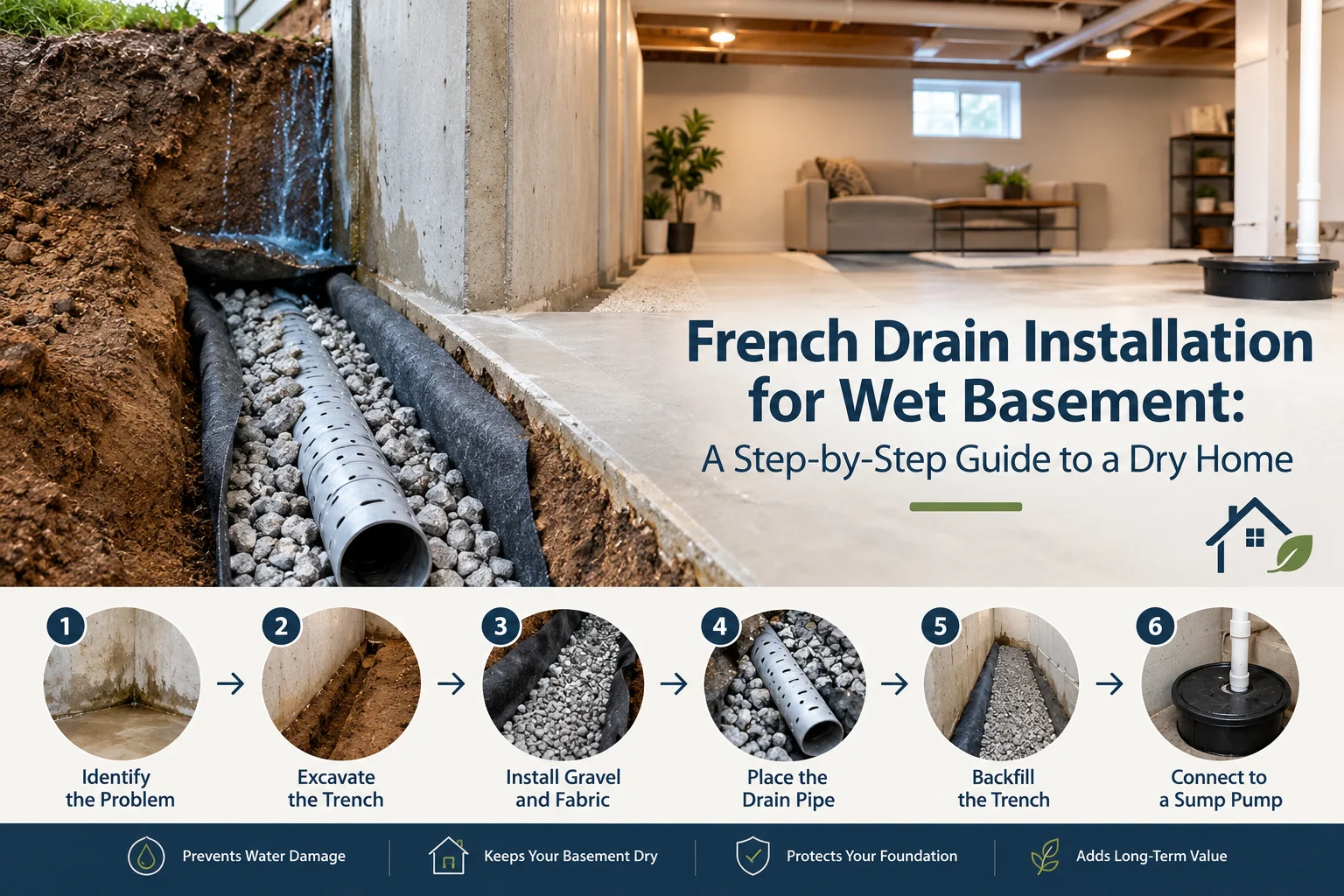
Quick answer: French drain installation for wet basement problems means cutting a trench along the inside edge of your basement floor. You lay a perforated pipe in gravel, wrap it in filter fabric, and connect it to a sump pump. Water flows into the pipe and gets pumped away before it floods your floor. Professional installs usually run from a few thousand dollars to about $15,000, depending on basement size and soil.

- How a French drain keeps water out of your basement
- The warning signs that you need one
- Interior vs. exterior options
- A step-by-step installation walkthrough
- Realistic costs, and when to hire a pro
You walk downstairs after a big storm and your sock lands in a puddle. Maybe it’s a small one this time. Next spring it may cover half the floor. Picture a homeowner who put off the problem for “just one more season.” Then the boxes of old photos on the bottom shelf got soaked. (This is an illustrative example, not a named customer.) Sadly, that story is common.
The good news is that a French drain is one of the most proven fixes. Let’s walk through how it works, what it costs, and how to do it right.
Interior French Drain Installation: What It Is and How It Works
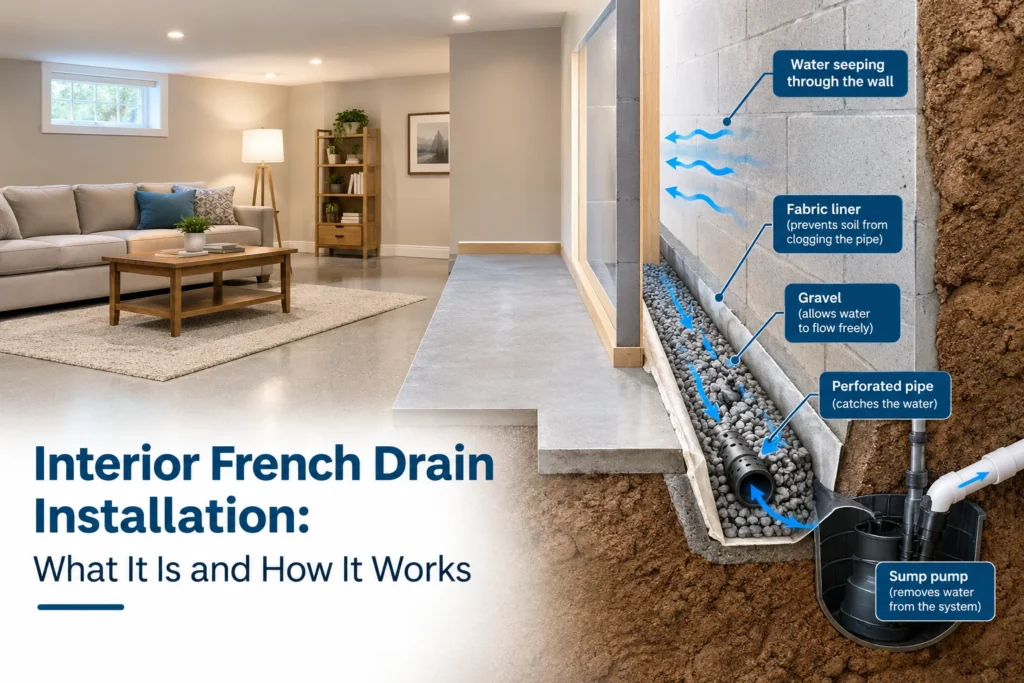
A French drain is a trench filled with gravel and a perforated pipe. It collects water and sends it somewhere safe. Think of it as an underground gutter.
Interior French drain installation puts that trench inside your basement. It runs under the floor, along the inside edge of your walls. Here is what happens:
- Groundwater rises and pushes on your foundation. This force is called hydrostatic pressure.
- Water finds its way into the gravel-filled trench.
- It flows into the pipe through small holes.
- Gravity carries it to a sump pump basin, which pumps it out and away from your house.
According to Oriole Basement Waterproofing, the drain relieves that pressure instead of fighting it. That is why it works so well.
Basement French Drain System: Signs You Need One
Not every damp spot means you need a full system. Still, these signs point to deeper trouble:
- Puddles on the floor after rain
- A musty smell that won’t go away, often a hint of hidden mold
- White, chalky powder on walls, called efflorescence
- Peeling paint or damp drywall
- Water that appears even during dry weather
That last sign matters. Water during dry weather usually means groundwater, not surface runoff. Gutters and grading can’t fix that kind of problem. A basement French drain system can.
Wet Basement Drainage Solutions: Interior vs. Exterior
You have two main choices, so let’s compare them.
| Feature | Interior Drain | Exterior Drain |
|---|---|---|
| Where it goes | Under the basement floor, along inside walls | Outside, around the footing |
| Digging needed | Cutting a strip of concrete | Major excavation of the yard |
| Disruption | Lower, mostly indoors | Higher, torn-up landscaping |
| Best for | Existing homes | New builds or easy-access foundations |
| Typical cost | Lower | Higher |
For most older homes, wet basement drainage solutions start with the interior option. It disturbs no landscaping, and it can often be done in one to two days. An exterior drain catches water earlier, but it means digging up your yard.
Interior Basement Drainage System: Materials and Tools You’ll Need
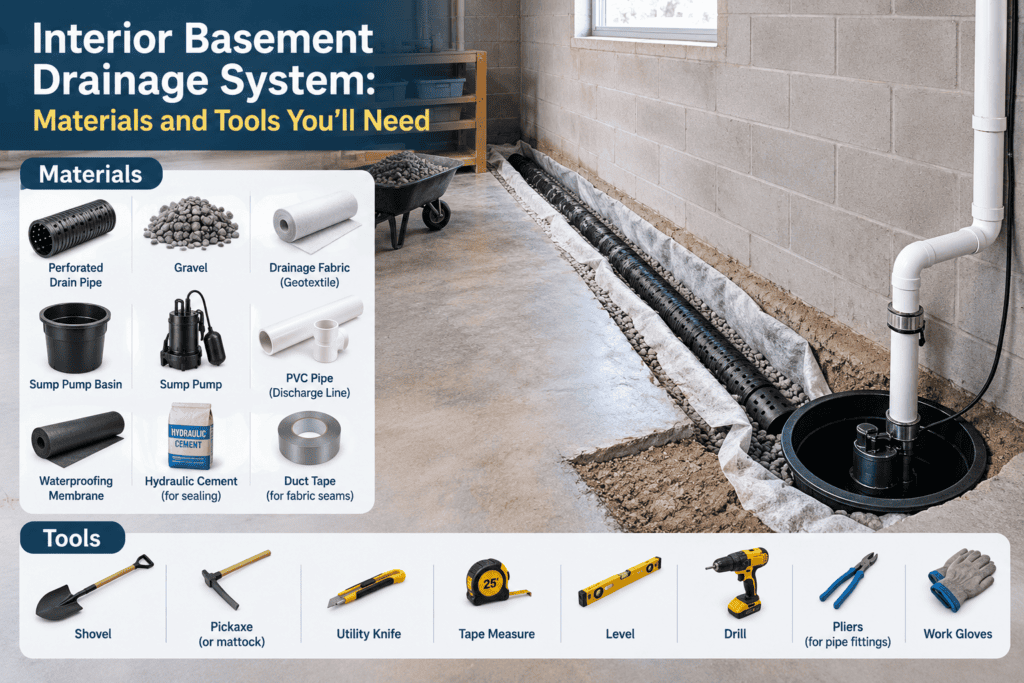
A strong interior basement drainage system depends on good parts. Cheap materials cause most failures.
Materials:
- 4-inch perforated PVC pipe (rigid pipe holds its slope for decades)
- ¾-inch clean washed gravel (not river rock or sand, which clog)
- Geotextile filter fabric
- A sump basin and pump, ideally with a battery backup
- Concrete mix to patch the floor
Tools:
- Concrete saw (wet-cutting type) and jackhammer
- Laser level or string line
- Shovels and a wheelbarrow
- Dust mask rated for silica, safety glasses, and ear protection
How to Install a French Drain in a Basement: Step by Step
This is a big project. Read the full list before you decide to tackle it yourself.
Step 1: Call Before You Dig
Dial 811 to have buried utilities marked. Then check for local permits. Rules vary by area.
Step 2: Plan the Route and Sump Location
Decide where the pump basin goes, usually at the lowest corner. Mark the trench line along the walls with chalk. Your drain must slope toward the basin. Many guides suggest about 1%, which is roughly a one-foot drop over 100 feet.
Step 3: Cut the Concrete
Mark a strip about 10 to 12 inches wide. Use a saw with water to cut along both lines. Wet cutting keeps dust down. This matters because concrete dust contains crystalline silica, which can harm your lungs.
Step 4: Break Out and Dig the Trench
Remove the concrete and dig the trench below the slab. Depth varies by foundation, so check local codes. Be careful near the footing. Dig too aggressively and you can undermine the structure that holds up your house.
Step 5: Add the Gravel Base
Spread a few inches of gravel. Keep the bottom smooth, and check the slope with your level.
Step 6: Lay the Pipe
Place the perforated pipe with holes facing down or sideways, as the manufacturer directs. Join sections tightly, and run the end into your sump basin.
Step 7: Wrap and Cover
Cover the pipe with more gravel. Then fold the filter fabric over the top. Skipped or badly wrapped fabric is one of the top reasons these systems clog within months.
Step 8: Patch the Floor and Test
Pour new concrete over the trench and let it cure. Then pour a bucket of water into the trench and the basin. Check that the pump turns on and the discharge line carries water well away from your house.
A friendly warning: Waterproofing companies often repair failed do-it-yourself systems, and homeowners end up paying twice. Be honest about your skills before you swing that jackhammer.
French Drain Cost for Basement: What to Expect
Let’s talk money. Prices vary a lot by region and by company, so treat these as rough guides, not quotes. For more ways to keep the project affordable, see our budget friendly renovation tips.
| Source Type | Reported Range |
|---|---|
| Mid-Atlantic contractor (BasementRemodeling.com) | $5,000–$15,000 |
| Indiana contractor (Michaelis Corp), by basement size | $4,000–$17,000 |
| Same Indiana source, interior systems | $3,000–$8,000 |
Basement size matters most. Small basements (600–800 sq ft) fall around $4,000–$6,000. Large ones (1,200+ sq ft) can reach $10,000–$17,000. Estimates differ even within one source, so always get written quotes.
French Drain Installation Cost: What Changes the Price
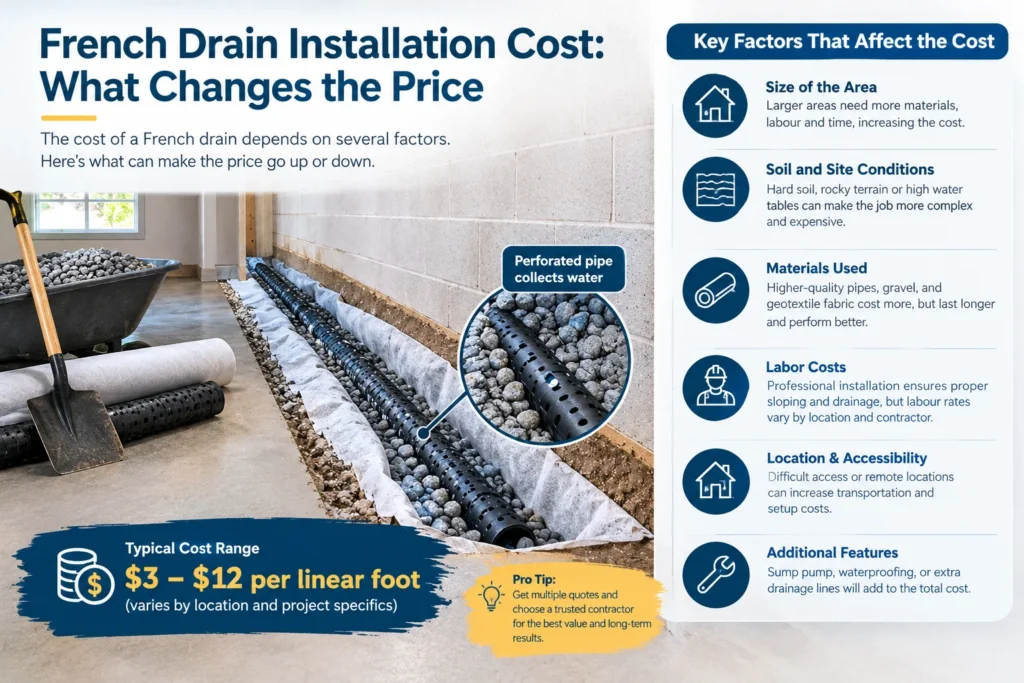
Several things push your French drain installation cost up or down:
- Basement size. More wall length means more trench and pipe.
- Soil type. Heavy clay can raise labor costs, since it takes more digging.
- Concrete removal. Roughly $3–$5 per square foot, according to one contractor guide.
- Sump pump and discharge line. Adding a pump and line can add hundreds to a couple thousand dollars.
- Permits and local labor rates.
- Finished vs. unfinished space. Finished basements need extra repair work.
Compare this with other fixes. A sump pump alone costs less but only removes water. It doesn’t stop water from reaching your walls. Sealants cost the least but only suit minor moisture. French drains last the longest, often 30 years or more. That cost is easier to accept when you remember what one flood can destroy.
Basement Water Drainage System: Maintenance Tips
A well-built basement water drainage system needs very little attention. Still, a few habits help:
- Test the pump once a year. Pour a bucket of water into the basin. The pump should switch on.
- Check the discharge line. It should carry water well away from the foundation.
- Get a backup pump. Storms often cut power, right when you need the pump most.
- Keep gutters and downspouts clear. They reduce the load on your drain.
A professionally installed interior system can last the life of the home.
Basement Waterproofing Solutions: Where a French Drain Fits
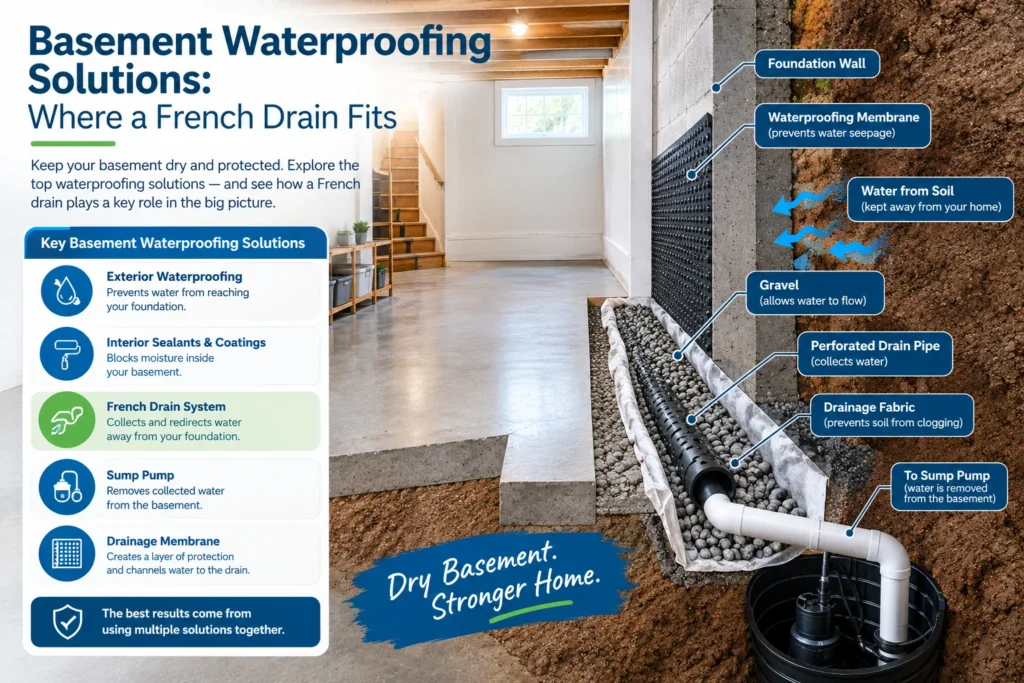
Think of basement waterproofing solutions as a team, not a single player:
- French drain: collects water that reaches the walls or floor
- Sump pump: moves collected water outside
- Grading and downspout extensions: keep rain away from the house
- Vapor barrier or sealants: manage minor dampness
- Crack repair: closes obvious entry points
The best plan often combines two or three. A French drain plus a sump pump gives you backup protection. If your basement is below the water table, or you plan to finish it, that combination is worth considering. And if you’re remodeling, deal with water first. Paint and carpet will not survive a leak.
How long does French drain installation for a wet basement take?
An interior system can often be done in one to two days for an average basement. Larger or more complex jobs take longer.
Can I install a French drain myself?
Technically, yes. In practice, correct slope, concrete cutting, and foundation safety make it tough. A professional is usually the safer choice.
Do I still need a sump pump?
Most interior drains need one, because the pump removes the water the drain collects.
Will a French drain stop all moisture?
It manages water, but it isn’t magic. A full plan may also include grading, gutters, and crack repair.
How do I know if the job was done well?
Ask for a written warranty, references, and proof of licensing and insurance.
Conclusion: French Drain Installation for Wet Basement Problems
A wet basement will not fix itself. Small puddles turn into mold, damaged walls, and ruined belongings. That is why French drain installation for wet basement problems is one of the smartest long-term repairs you can make.
Here is what to remember:
- A French drain gives water an easy path. Instead of pushing through your walls, groundwater flows into a gravel-filled trench and out through a sump pump.
- An interior system suits most existing homes. Interior French drain installation costs less and disturbs no landscaping. Exterior drains work best for new builds or easy-access foundations.
- The details decide success. Correct slope, clean ¾-inch gravel, proper filter fabric, and a reliable pump with a backup keep the system working for decades.
- Costs vary a lot. Reported prices run from about $3,000 to $17,000, depending on basement size, soil, and local labor rates. Always compare at least two or three written quotes.
- Water control works best as a team. Combine your drain with good gutters, grading, and crack repair for full basement waterproofing solutions.
DIY is possible, but cutting concrete, holding the right slope, and working beside your foundation are risky. If you have any doubt, hire a licensed, insured pro and ask for a written warranty.
Most important, don’t wait for the next big storm. Book a free inspection, find out where your water is coming from, and fix it before it damages your home. A dry basement means a healthier home and peace of mind.