
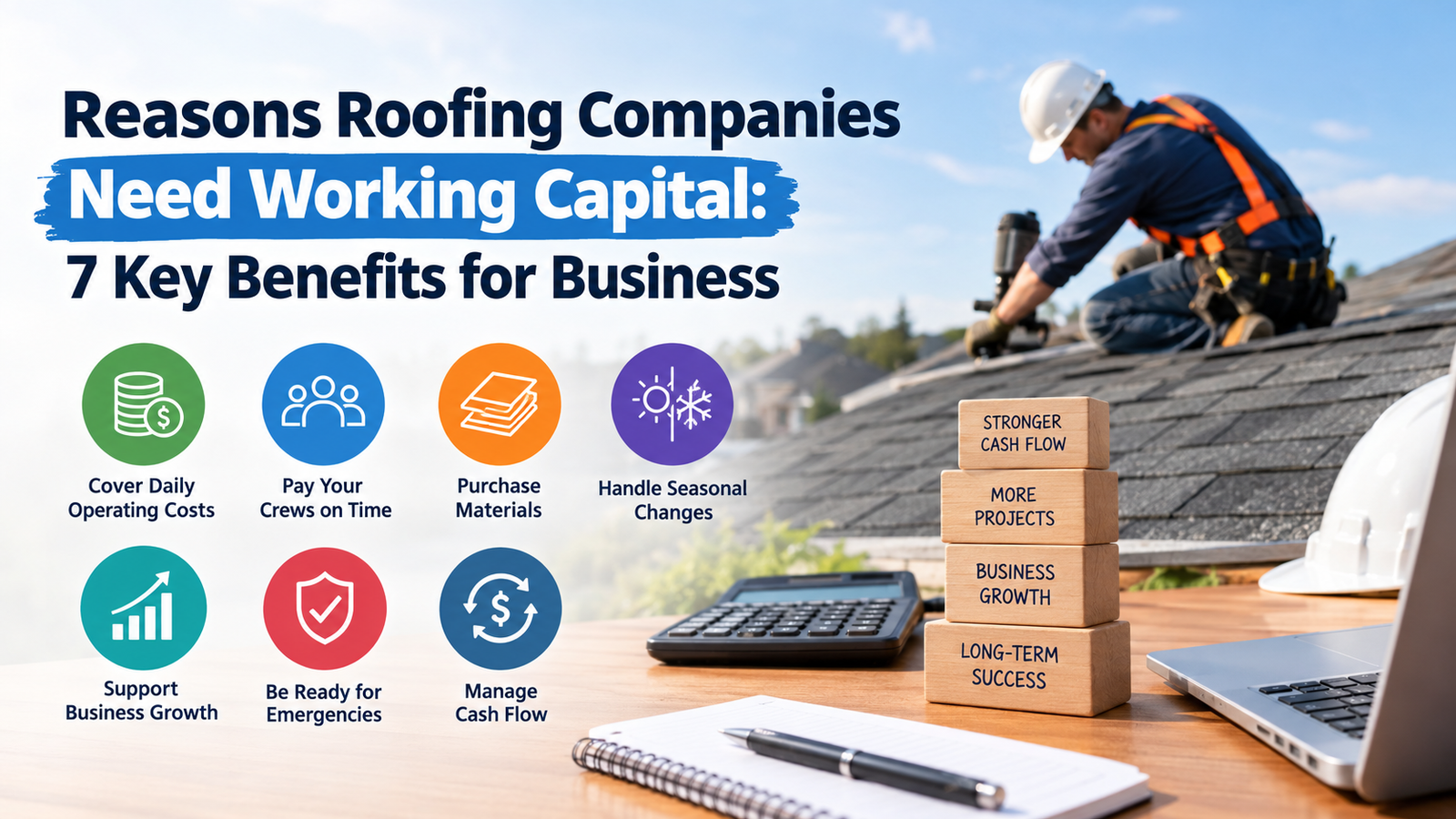
Reasons Roofing Companies Need Working Capital: 7 Key Benefits for Business
Roofing companies need more than skilled workers and quality materials to succeed. They also need enough money to manage daily expenses, complete projects on time, and handle unexpected costs. Customers may take weeks to pay their invoices, but suppliers, employees, and subcontractors still expect timely payments.
Understanding the reasons roofing companies need working capital helps contractors manage financial challenges, maintain steady operations, and grow their businesses without unnecessary delays.
Working capital is the money available to cover short-term business expenses. For roofing contractors, it can help pay for roofing materials, labor, equipment repairs, fuel, insurance, and other operating costs. According to the British Business Bank’s working capital guide, working capital plays an important role in keeping everyday business operations running smoothly.
In this guide, you will learn seven key benefits of working capital, common roofing business cash flow problems, financing options for contractors, and practical steps to improve financial stability.
What Is Working Capital for Roofing Companies?
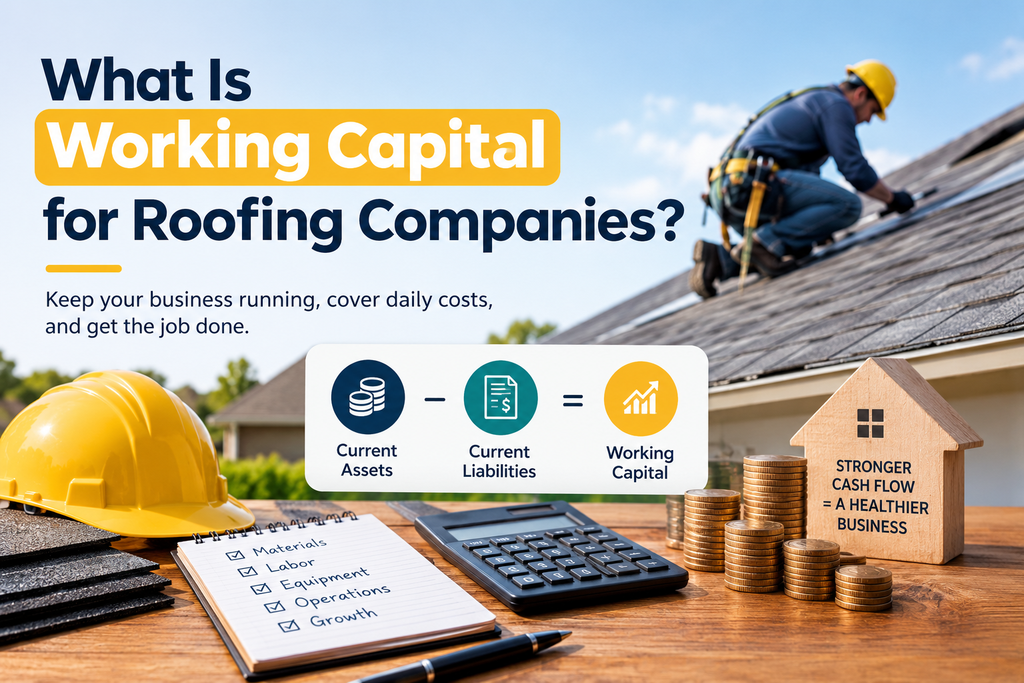
Working capital for roofing companies is the difference between current assets and current liabilities. Current assets may include cash, short-term deposits, and customer payments due soon. Current liabilities include supplier bills and other short-term financial obligations.
The formula is:
Working Capital = Current Assets − Current Liabilities
For example, suppose a roofing company has $60,000 in current assets and $35,000 in current liabilities. Its working capital is $25,000.
However, positive working capital does not always mean the company has enough cash available immediately. If most of its money is tied up in unpaid invoices, it may still struggle to pay employees or purchase materials.
This is why roofing company cash flow management is important. Contractors need to understand not only how much money they are owed but also when they expect to receive it and which expenses must be paid first.
The Export Finance Australia guide provides additional information about the importance of working capital for everyday business operations.
1. Buy Roofing Materials Without Delaying Projects
One of the main reasons roofing companies need working capital is to purchase materials before a project begins. Roofing contractors often need shingles, underlayment, flashing, nails, sealants, insulation, and other supplies before receiving payment from customers.
Imagine a contractor wins a $25,000 roof replacement project. The materials cost $8,000, but the customer will pay only after the work reaches an agreed stage. Without enough available cash, the contractor may struggle to order supplies on time.
Working capital can help roofing businesses:
- Purchase materials before the scheduled start date.
- Pay suppliers according to agreed terms.
- Maintain reliable supplier relationships.
- Avoid delays caused by missing supplies.
- Manage multiple roofing jobs more efficiently.
Material planning is equally important. Contractors should compare supplier prices, estimate quantities accurately, and avoid purchasing more inventory than they can reasonably use.
For related building-material information, read the RenovateNest guide to PIR insulation benefits.
2. Solve Roofing Business Cash Flow Problems

Roofing business cash flow problems often occur when expenses must be paid before customer invoices are settled. A company may have several profitable projects but still lack enough cash to cover its immediate bills.
For example, a contractor may have $40,000 in outstanding invoices but need $12,000 for payroll and $6,000 for supplier payments. If customers pay late, the business could face a temporary cash shortage.
Effective roofing company cash flow management can reduce this pressure.
Contractors should follow these steps:
- Track outstanding invoices and payment deadlines.
- Prepare a weekly cash flow forecast.
- Send invoices promptly after completing agreed work.
- Follow up professionally on overdue payments.
- Maintain a reserve for unexpected expenses.
- Review upcoming payroll and supplier obligations.
Working capital can bridge the gap between incoming payments and outgoing expenses. However, it works best alongside careful budgeting, clear payment terms, and timely invoice collection.
The RFC guide to working capital also discusses why working capital matters for everyday business activities.
3. Pay Employees and Subcontractors on Time
Roofing companies depend on experienced roofers, crew leaders, and subcontractors to complete projects safely and efficiently. However, wages and subcontractor payments may become due before customers pay their invoices.
A shortage of cash can lead to delayed payroll, dissatisfied workers, and unfinished projects. Over time, unreliable payments can make it harder to retain skilled employees or find dependable subcontractors.
Having enough working capital helps roofing contractors:
- Pay employees and subcontractors on schedule.
- Retain experienced workers.
- Reduce interruptions across projects.
- Maintain trust with business partners.
- Keep jobs moving during delayed payment periods.
For example, a contractor may finish two projects while waiting for payment from commercial customers. The crew still needs to be paid, even though the customer money has not arrived. Available working capital can help cover this temporary gap.
Contractors should prepare payroll forecasts and maintain accurate records of labor costs for each job. Before borrowing money, they should also check whether expected income can cover future repayments.
4. Handle Storm Damage and Seasonal Demand
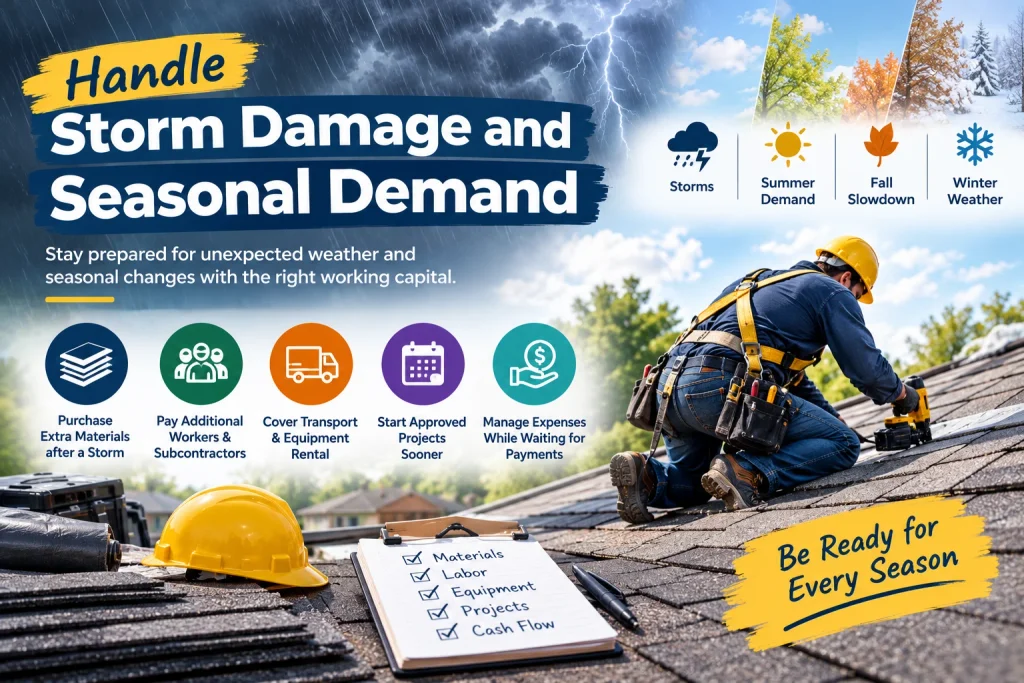
Weather can significantly affect roofing businesses. Hailstorms, strong winds, and heavy rain may suddenly increase demand for roof inspections and repairs. At the same time, contractors may need additional materials, temporary workers, and equipment rentals.
Suitable financing options for roofing contractors can help businesses respond to opportunities when cash reserves are insufficient.
Working capital may help contractors:
- Purchase extra materials after a storm.
- Pay additional workers and subcontractors.
- Cover transportation and equipment rental.
- Start approved projects sooner.
- Manage expenses while waiting for customer payments.
Seasonal slowdowns create the opposite problem. During periods of bad weather or lower demand, insurance premiums, vehicle expenses, and other bills may continue.
Contractors can prepare by saving money during busy periods, offering maintenance services during quieter months, and creating a realistic seasonal budget.
Financing may help when a temporary funding gap remains, but borrowing should match the company’s ability to repay. Contractors should also avoid accepting more emergency work than their crews can complete safely.
5. Maintain Roofing Equipment and Vehicles
Roofing businesses depend on reliable trucks, trailers, ladders, nail guns, compressors, and safety equipment. Unexpected breakdowns can delay projects and increase operating costs.
For example, a contractor may need an urgent $2,000 truck repair while several projects are underway. Without sufficient cash, the company might postpone the repair and miss scheduled jobs.
Working capital can help pay for:
- Routine equipment maintenance.
- Emergency vehicle repairs.
- Replacement tools and essential supplies.
- Fuel and transportation costs.
- Other unexpected operating expenses.
Roofing business financing may also help companies expand their equipment capacity. However, working capital and equipment financing serve different purposes. A short-term cash need may suit a working capital facility, while a major vehicle or equipment purchase may be better suited to equipment financing.
Before choosing a financing product, contractors should compare interest rates, fees, repayment terms, and collateral requirements.
Preventive maintenance also matters. Regular inspections, service schedules, and proper equipment storage can reduce avoidable repair costs and help roofing crews remain productive.
6. Roofing Contractor Business Loans Can Support Cash Flow
Roofing contractor business loans may provide funds when available cash is insufficient to cover essential expenses. Depending on the lender and product, contractors may also consider a business line of credit, invoice factoring, or supplier credit.
| Financing option | Potential use |
|---|---|
| Business line of credit | Recurring cash flow gaps |
| Short-term business loan | Temporary operating expenses |
| Invoice factoring | Accessing funds from eligible unpaid invoices |
| Equipment financing | Purchasing eligible tools and vehicles |
| Supplier credit | Buying materials and paying later under agreed terms |
Working capital loans for contractors can help bridge the gap between paying project expenses and collecting customer payments. The Bay Street Lending guide to working capital for roofing contractors offers additional information about funding needs in the roofing industry.
Before accepting a loan, calculate the amount needed and compare the total repayment cost. Check the interest rate, fees, repayment schedule, collateral requirements, and consequences of missed payments.
For example, borrowing $15,000 may appear helpful, but the owner should calculate the full repayment amount and confirm that expected project income can cover both loan payments and regular operating expenses.
Financing is not a substitute for a sustainable business model. If a company repeatedly borrows to cover ongoing losses, the owner should review pricing, overhead, payment terms, and project profitability.
7. Small Business Loans for Roofing Companies Help Fund Growth
Growth often requires money before additional revenue arrives. A roofing company may want to hire another crew, enter a new service area, accept larger contracts, or increase its marketing budget.
Small business loans for roofing companies may help eligible businesses finance these opportunities when existing cash reserves are insufficient.
For example, a contractor receives a commercial roofing contract but must purchase materials and pay workers before the first progress payment. The owner should estimate total project costs, review the payment schedule, and calculate the maximum expected cash shortage.
If financing is necessary, the company should compare available options and ensure that the project’s expected profit can support borrowing costs and repayments.
Working capital can support growth, but contractors should not accept more projects than their crews, finances, and equipment can reasonably handle. Growth should be planned around realistic cash flow forecasts rather than sales opportunities alone.
Step-by-Step Guide to Managing Roofing Company Cash Flow
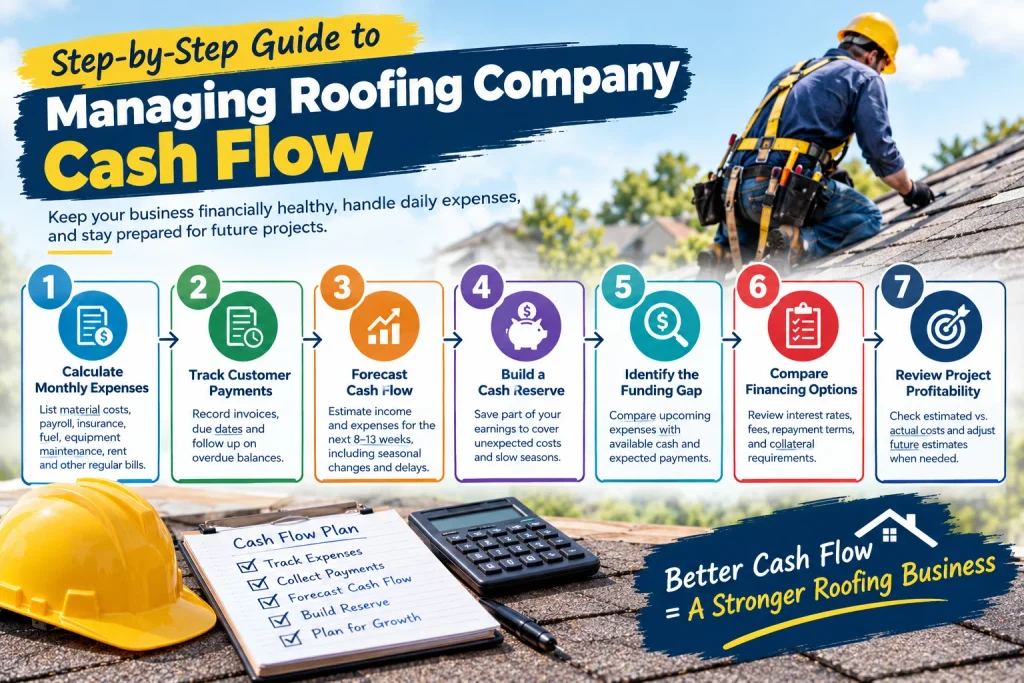
Roofing contractors can improve financial stability by following these practical steps.
Step 1: Calculate monthly expenses. List material costs, payroll, insurance, fuel, equipment maintenance, rent, and other regular bills.
Step 2: Track customer payments. Record invoice amounts, due dates, and overdue balances. Follow up promptly when payments are late.
Step 3: Forecast cash flow. Estimate expected income and expenses over the next 8–13 weeks, allowing for realistic payment delays and seasonal changes.
Step 4: Build a cash reserve. Save part of the money earned during profitable periods to cover unexpected costs and seasonal slowdowns.
Step 5: Identify the funding gap. Compare upcoming expenses with available cash and expected customer payments. This helps distinguish a temporary shortage from a larger financial problem.
Step 6: Compare financing options. Review the total borrowing cost, repayment dates, fees, and collateral requirements before signing an agreement.
Step 7: Review project profitability. Compare estimated and actual labor, material, and overhead costs. Adjust future estimates when projects consistently cost more than expected.
Following these steps can help contractors identify financial problems early rather than waiting until they cannot pay suppliers or employees.
Common Mistakes Roofing Contractors Should Avoid
Even when financing is available, contractors can create financial pressure by making avoidable mistakes. Common problems include:
- Ignoring unpaid invoices: Late customer payments can leave a business short of cash even after completing profitable work.
- Underestimating project costs: Unexpected labor, waste, repairs, and material price changes can reduce profits.
- Mixing business and personal expenses: Separate records make it easier to understand the company’s real financial position.
- Borrowing without a repayment plan: Loan payments can make future cash flow problems worse if expected income does not arrive.
- Accepting too many projects at once: A growing workload may require more upfront cash, labor, equipment, and management time than the business can support.
Contractors can reduce these risks by keeping accurate records, reviewing budgets regularly, and making financing decisions based .
1. Why do roofing companies need working capital?
Roofing companies need working capital to pay for materials, labor, fuel, insurance, equipment maintenance, and other short-term expenses while waiting for customer payments. It helps keep projects moving and supports daily operations.
2. What is working capital for roofing companies?
Working capital is the difference between a company’s current assets and current liabilities. It indicates the short-term resources available to help cover upcoming financial obligations.
3. How can roofing contractors improve cash flow?
Roofing contractors can improve cash flow by sending invoices promptly, following up on overdue payments, forecasting expenses, negotiating suitable supplier terms, tracking project costs, and maintaining a cash reserve.
4. What financing options are available for roofing contractors?
Potential options include business lines of credit, short-term business loans, invoice factoring, supplier credit, and equipment financing. Availability, eligibility, costs, and repayment terms vary by provider.
5. Are working capital loans suitable for roofing businesses?
They may be suitable when a business has a temporary funding gap and a realistic repayment plan. Contractors should compare the total cost of borrowing and ensure expected cash flow can cover repayments.
6. How much working capital does a roofing company need?
There is no single amount that suits every roofing company. The required amount depends on payroll, material costs, overhead, project size, payment schedules, seasonal demand, and available cash reserves. A cash flow forecast can help estimate the funding requirement.
7. Can working capital help a roofing company grow?
Yes. Working capital may help a roofing company pay upfront project expenses, hire additional workers, purchase materials, and manage larger contracts. However, growth plans should be based on realistic costs, expected revenue, and repayment capacity.
8. What causes cash flow problems in roofing businesses?
Common causes include delayed customer payments, high upfront material costs, seasonal demand, unexpected equipment repairs, rising labor expenses, and taking on projects without sufficient financial planning.
9. What is the difference between working capital and profit?
Profit is the amount remaining after expenses are deducted from revenue over a given period. Working capital is the difference between current assets and current liabilities. A profitable business can still experience a cash shortage if customers pay late or short-term bills become due first.
Conclusion: Why Working Capital Matters for Roofing Companies
The reasons roofing companies need working capital go beyond paying bills. Working capital helps contractors purchase materials, pay workers, handle seasonal demand, maintain equipment, manage cash flow, and prepare for growth.
However, access to funds is only one part of financial stability. Roofing companies also need accurate project estimates, clear payment terms, timely invoicing, reliable cost tracking, and a practical cash reserve.
By understanding working capital for roofing companies, comparing suitable financing options, and following a consistent cash flow management process, contractors can make better financial decisions and reduce avoidable project delays.
The goal is not simply to borrow more money. It is to keep enough cash available to meet obligations, complete work reliably, and build a roofing business that can grow sustainably.
For more home improvement and renovation information, visit RenovateNest.